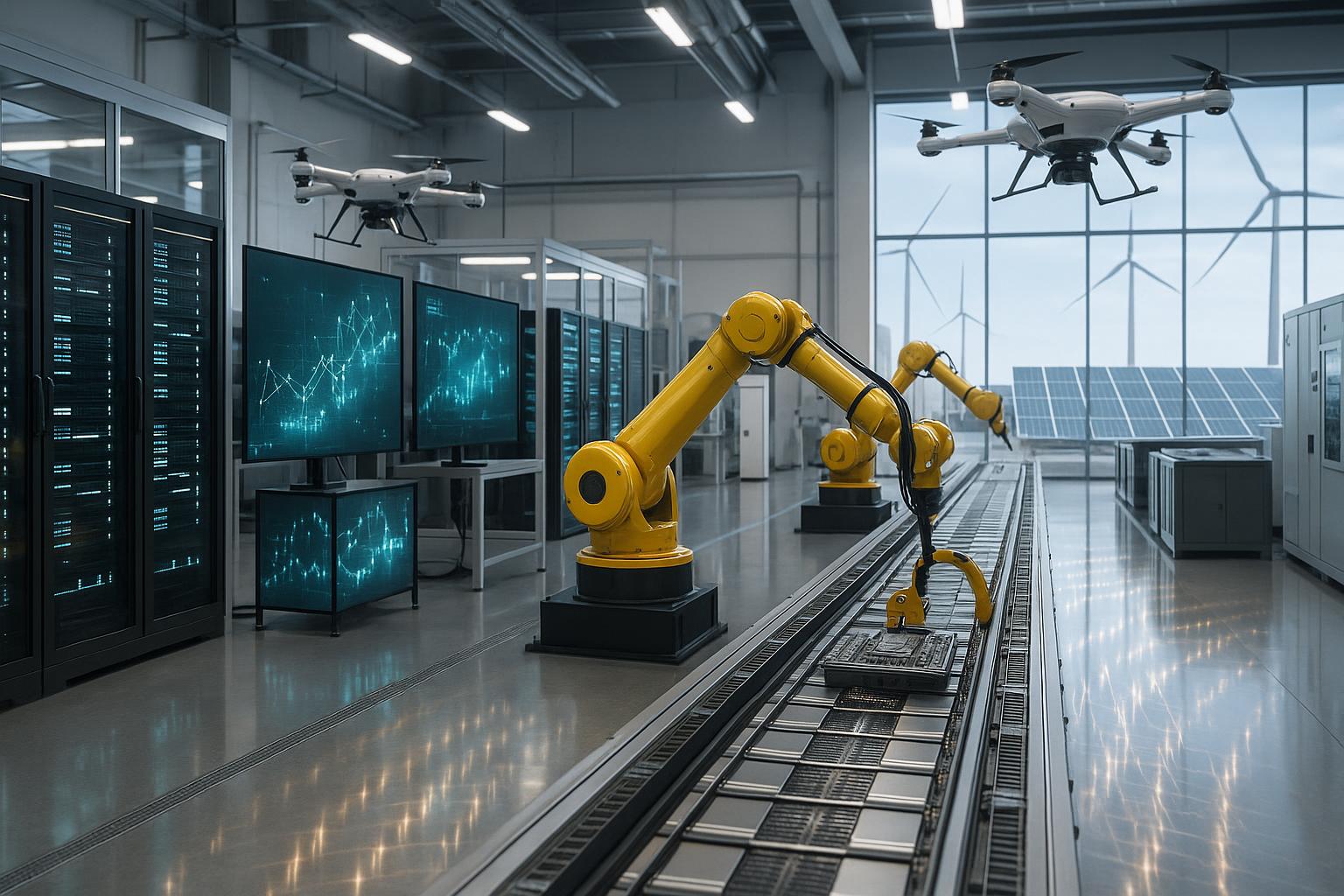
Introduction: The Investment Paradigm Shift in AI and Automation
In 2026, artificial intelligence (AI) and automation continue to revolutionize industries at an unprecedented pace. Their influence extends far beyond cutting-edge startups and tech giants, penetrating legacy sectors and fundamentally altering investment dynamics globally. For investors, understanding this transformation is no longer optional—it’s essential. Markets now react not only to quarterly earnings but also to how companies integrate AI strategies, whether through product innovation, operational efficiency, or capacity expansion. This evolving landscape demands a nuanced, forward-looking perspective that goes beyond surface-level financial metrics to consider underlying technological momentum and strategic positioning.
Several major corporations recently reported earnings and strategic updates reflecting these trends. Semiconductor leaders enjoy explosive growth fueled by AI demand, traditional technology firms are navigating disruption anxiously, and automotive innovators are doubling down on automation and AI investment amidst intensifying competition. Through detailed analysis of these developments, this article explores their implications for investors seeking not just short-term gains, but sustainable, AI-driven advantages.
1. AI Demand as a Catalyst for Semiconductor Profitability
One of the clearest beneficiaries of the AI boom is the semiconductor industry, exemplified by companies like SK Hynix. Their recent quarterly profits surged over 400%, a remarkable leap driven largely by skyrocketing demand for AI-related chips. These specialized semiconductors power everything from cloud-based AI training to edge computing devices, making them indispensable to the AI ecosystem. This shift underscores a vital lesson: semiconductor investments are no longer about mere capacity increases but about enabling the complex, compute-intensive workloads of modern AI.
For investors, this means scrutinizing chipmakers’ product portfolios and R&D focuses is crucial. Firms investing heavily in AI-centric hardware solutions — such as advanced GPUs, AI accelerators, and memory optimized for AI inference — are positioned for sustained demand growth. Conversely, companies relying predominantly on legacy chip markets may face margin pressures as AI workloads redefine chip specifications and performance requirements.
2. Legacy Tech Firms: Balancing Growth and AI-Driven Disruption
Large, established technology firms like IBM demonstrate the complexities legacy players encounter amid AI’s rapid rise. Despite investor concerns about mainframe disruption, IBM’s recent earnings revealed a 51% increase in Z mainframe hardware revenue. This defies the narrative of legacy decline, suggesting that strategic AI integration can revitalize even mature product lines.
IBM’s approach highlights the value of leveraging existing enterprise infrastructure while embedding AI capabilities, thereby protecting and extending revenue streams. For investors, the takeaway is to look beyond headline fears of disruption and carefully evaluate how companies adapt their business models. Firms that integrate AI to enhance core products and expand market reach can sustain strong growth even in contested spaces. It also indicates that AI’s impact is multifaceted — disruption does not necessarily mean replacement but can mean evolution and augmentation.
3. The Automotive Sector’s Increasing AI and Automation Commitment
Tesla’s recent earnings report offers an instructive example of AI and automation priorities shaping corporate strategies, though not without challenges. Despite missing revenue estimates due to weakening demand amidst growing global competition, Tesla posted an impressive jump in auto margins. More notably, the company announced a 25% increase in its 2026 spending plan, explicitly to finance AI and robotic initiatives.
This dual reality—revenue softness paired with aggressive automation investments—reflects the intense long-term competition in electric vehicles (EVs) where AI-driven manufacturing efficiency and autonomous driving capabilities increasingly define market leadership. For investors, Tesla’s case presents a nuanced risk-reward balancing act: near-term demand challenges might pressure revenues, but investments in AI and robotic automation represent a bet on substantial future returns through innovation-driven cost reductions and new product capabilities.
4. Leadership Choices and Their Impact on AI-Driven Business Evolution
Shifts in corporate leadership, especially in sectors on the cusp of AI transformation, can signal strategic realignments with broad investment implications. The appointment of Lululemon’s new CEO, a Nike veteran now tasked with guiding a primarily retail and apparel-focused company, poses questions about the adaptability of leadership styles to AI and automation challenges.
While this move is not directly related to AI technologies, it underscores a critical principle for investors: leadership agility in embracing AI and automation greatly influences a company’s ability to innovate and scale. Leaders must balance cultural change, technology adoption, and operational execution. Investors should closely monitor leadership transitions in companies within tech-adjacent fields, as those able to integrate AI-driven analytics, digital customer engagement, and supply-chain automation are more likely to emerge stronger in a competitive environment.
5. Real-World Implications for Investors in an AI-Driven Economy
Integrating AI and automation into investment strategies demands a comprehensive understanding of sector-specific drivers and technological trajectories. The semiconductor sector, for instance, reveals high capital intensity but substantial upside due to AI’s insatiable compute needs. Legacy tech companies illustrate the complexity of disruption, where embracing AI enhances resilience and growth.
Investors must also consider risk factors such as competitive pressures, execution risks in AI projects, and shifts in consumer demand patterns influenced by AI innovations. The automotive sector teaches that capital allocation towards AI and automation is a forward-looking indicator of strategic intent and could be a harbinger of future market share shifts. Meanwhile, leadership changes highlight the subtle but impactful role of management’s vision in navigating AI transition periods.
6. Practical Takeaways for Active Investors
For investors aiming to capitalize on AI and automation trends, several key principles emerge. First, focus on companies with clear AI integration strategies that extend beyond marketing hype to tangible investments in R&D, production capabilities, and ecosystem partnerships. Second, evaluate firms’ ability to balance short-term financial performance with long-term innovation commitments, recognizing that market leadership in AI-driven sectors often requires patience and confidence in management.
Additionally, examine sector-specific AI dependencies—such as the critical role of advanced semiconductors in supporting AI workloads—or the potential for AI to reinvent traditional business lines, as seen in IBM’s mainframe growth narrative. Finally, consider the human factor: corporate leadership’s willingness and aptitude to embrace AI-driven change can make a critical difference in execution success, shaping both operational results and stock performance.
Conclusion: Navigating the AI and Automation Investment Frontier
The investment landscape in 2026 is being profoundly shaped by artificial intelligence and automation, creating both unprecedented opportunities and intricate challenges. A holistic approach that combines technological insight with rigorous financial analysis is paramount. Investors who move beyond simplistic growth projections to understand the strategic deployment of AI, its sector-specific impacts, and the quality of leadership driving change will be best positioned to identify sustainable winners.
As the cases of SK Hynix, IBM, Tesla, and others illustrate, AI is not a monolithic force but a catalyst transforming industries in nuanced ways. By integrating these lessons into portfolio strategies, investors can build resilience against disruptions and capture the growth potential inherent in the automation and AI revolution.