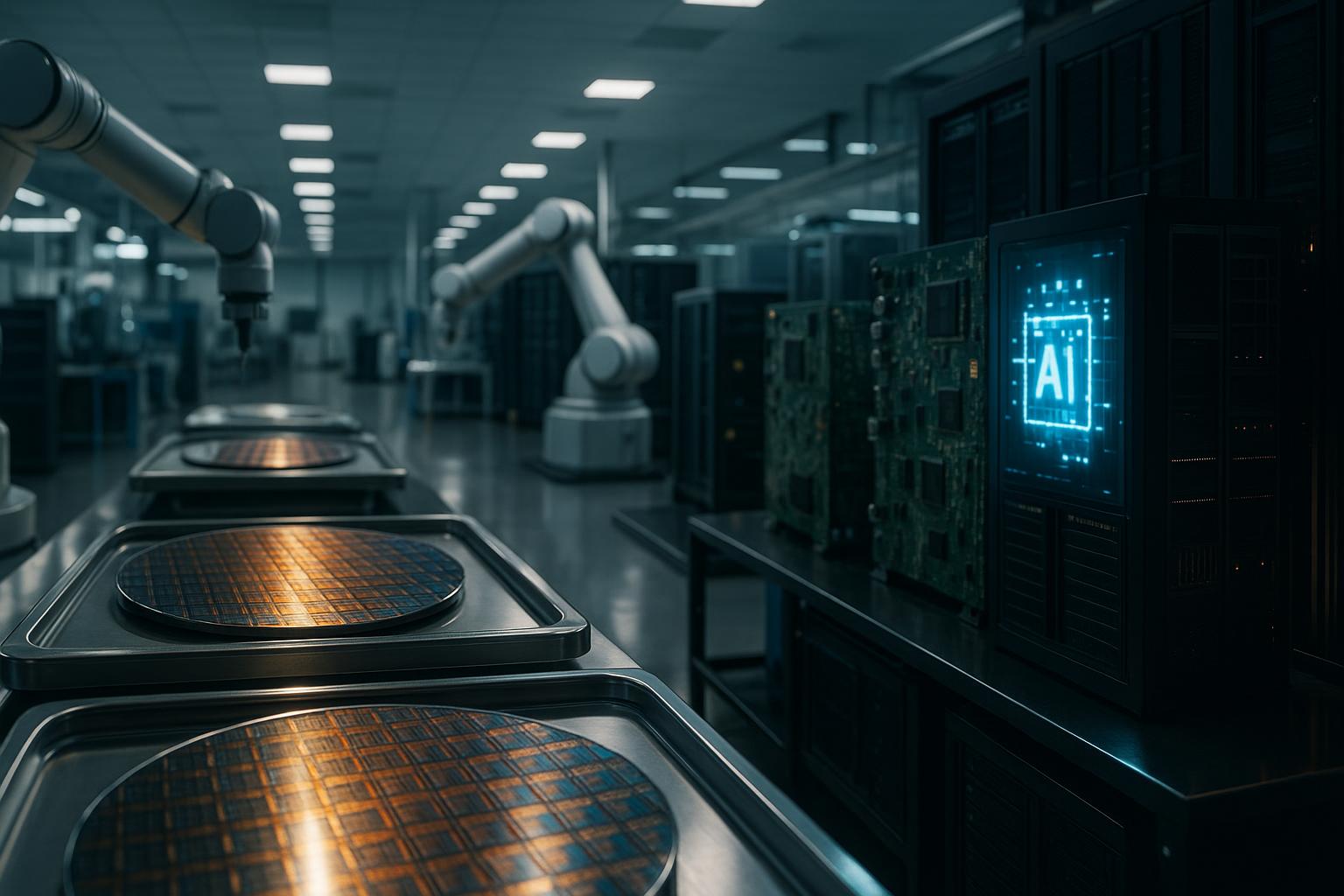
Introduction: The Dawn of a New Investment Frontier
Artificial intelligence is no longer a distant futuristic concept; it’s a transformative force actively rewriting the rules of technology and investment in 2026. This shift is profoundly impacting the semiconductor industry, catalyzing a surge that echoes the explosive growth of the dot-com bubble more than two decades ago. However, while the pace and scale of this growth create fertile ground for investors, it also demands rigorous analysis to differentiate sustainable trends from overheated speculation. Understanding the dynamics at play in AI, automation, and semiconductor sectors is crucial for any investor seeking to capitalize on this historic moment. This article unpacks these forces and offers actionable insights to navigate the rapidly evolving landscape with a focus on long-term value creation.
AI’s Role as the Catalyst for Semiconductor Growth
The semiconductor industry is foundational to AI’s explosive development. AI workloads require vastly more computing power, driving demand for cutting-edge chips optimized for machine learning tasks. Companies like AMD have benefited immensely, with recent earnings eclipsing expectations, buoyed by burgeoning data center requirements. These data centers power AI models and cloud computing services, representing the backbone of modern AI applications. From an investment standpoint, this demand signals a structural shift rather than a cyclical blip, suggesting sustained growth for agile semiconductor companies that innovate rapidly. However, the complexity lies in identifying which players will not only meet surging demand but also maintain technological leadership amid fierce competition and supply chain challenges.
Parallel Lessons from the Dot-Com Era: Caution Amid Exuberance
While today’s semiconductor rally draws exciting parallels with the late 1990s dot-com boom, it also warrants caution. Market indicators reveal that semiconductor stocks have achieved performance milestones not seen since just before the dot-com bubble burst. This raises the specter of overheating, suggesting investors should temper enthusiasm with critical evaluation. Unlike many dot-com companies that lacked clear revenue models, semiconductor firms presently benefit from tangible demand drivers rooted in AI and automation expansion. Still, given the rapid price appreciation, investors should adopt a disciplined approach: focusing on fundamentals, cash flow health, and governance quality rather than chasing momentum. Diversification within technology subsectors and a clear exit strategy will be vital given the market’s volatility potential.
Automation and AI: Redefining Capital Allocation and Operational Efficiency
The intersection of AI and automation isn’t just driving chip demand—it’s transforming how companies allocate capital and operate. Automation technologies improve manufacturing precision and speed, enabling semiconductor firms to ramp up production while controlling costs. Additionally, AI-driven analytics optimize investment decisions, from R&D prioritization to supply chain management, reducing uncertainty in a historically volatile industry. For investors, recognizing how companies leverage AI internally to strengthen operational resilience can provide a competitive edge when assessing long-term viability. Investment strategies that incorporate metrics of automation integration and AI adoption levels may outperform those solely focused on revenue growth figures.
Real-World Implications: Geopolitical and Market Sentiment Factors
Investment environments in 2026 remain sensitive to geopolitical developments, with tensions around critical shipping lanes and trade routes influencing energy and raw material availability. For example, shifts in U.S. policy relating to the Strait of Hormuz have recently affected oil prices and market sentiment, indirectly impacting manufacturing costs within the semiconductor supply chain. Investors need to incorporate geopolitical risk analysis as part of their evaluation process, recognizing that energy price volatility can quickly influence profit margins in capital-intensive sectors like chip manufacturing. Furthermore, regulatory dynamics surrounding emerging technologies and consumer trends, such as FDA decisions on product authorizations, can signal shifts in market openness and innovation incentives.
Investment Strategies: Balancing Opportunity with Risk Mitigation
Given the rapid appreciation and structural transformations, a nuanced investment approach is essential. First, focus on companies demonstrating leadership in AI-specific chip design and scalability. Firms with diversified revenue streams, partnerships in cloud computing, and proven R&D efficacy are better positioned. Next, consider thematic ETFs that provide exposure to a basket of AI and semiconductor innovators, offering risk dispersion. Incorporate scenario analysis to gauge impacts of potential regulatory changes or supply chain disruptions. Finally, monitor valuation multiples critically—while growth justifies premium pricing, stretched valuations may signal cyclical reversals. Regular portfolio reviews, combined with an eye on technological milestones, can help investors remain aligned with evolving industry fundamentals.
Conclusion: Harnessing AI-Driven Semiconductor Growth Responsibly
The burgeoning AI revolution is indisputably propelling a new era of semiconductor expansion, translating into exceptional opportunities for investors willing to engage thoughtfully. While the parallels with past market bubbles warrant vigilance, today’s growth is underpinned by real technological and economic shifts. By integrating a deep understanding of AI’s role, recognizing the power of automation, and carefully balancing risks with growth prospects, investors can craft portfolios that stand to benefit from this transformative epoch. Ultimately, success lies not in reacting to hype but in discerning enduring trends, positioning capital strategically, and adapting to the fast-paced innovation landscape that defines AI and semiconductor sectors in 2026.