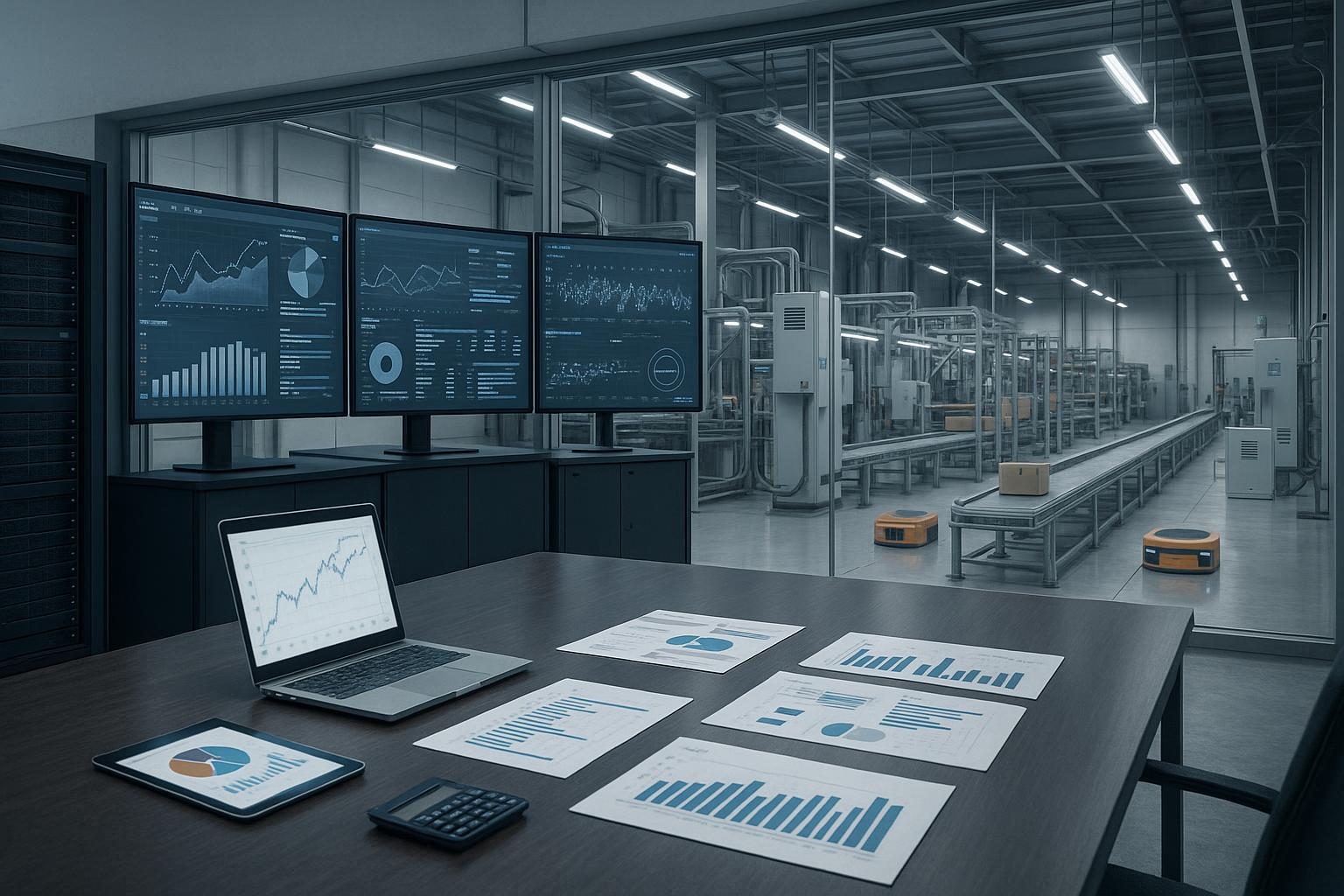
Introduction: The Growing Imperative for AI and Automation in a Cost-Intensive Landscape
In today’s volatile economic environment, companies are grappling with escalating operational expenses that threaten profit margins and long-term growth prospects. A prominent example is the aviation industry’s recent challenges due to soaring jet fuel prices, which have compelled major players like American Airlines to revise earnings forecasts downward. This scenario reflects a broader, persistent theme across sectors where input costs fluctuate unpredictably. For investors, recognizing how businesses integrate artificial intelligence (AI) and automation to counterbalance these pressures is essential. These advanced technologies do not merely reduce costs in the short term; they fundamentally reshape operational models, offering sustainable competitive advantages.
AI and automation represent pivotal tools enabling firms to optimize efficiency, reduce human error, and unlock new value streams. As soaring expenses tighten budgetary constraints, enterprises adopt intelligent systems to enhance forecasting, streamline supply chains, and improve decision-making agility. This shift is transforming traditional financial outlooks, encouraging investors to analyze beyond headline figures and evaluate a company’s technological adaptability and innovation trajectory. In this article, we explore this transformation from multiple angles—corporate strategy, operational execution, and investment opportunities—equipping readers with a nuanced understanding of AI’s role in navigating cost pressures.
Driving Operational Efficiency: AI’s Role in Cost Management
One of the most impactful applications of AI lies in its capacity to analyze massive datasets swiftly and accurately, enabling companies to forecast costs and demand more precisely. For instance, airlines facing jet fuel price volatility can deploy AI-based predictive analytics to optimize fuel purchasing strategies and flight operations. By simulating thousands of scenarios, AI systems can recommend fuel hedging tactics or route adjustments that minimize fuel consumption, directly preserving margins. Beyond prediction, machine learning algorithms can also improve maintenance schedules, detecting potential aircraft issues proactively, thus reducing downtime and unexpected expenses.
Automation complements these predictive capabilities by executing routine, labor-intensive tasks efficiently, freeing human resources for higher-value activities. In logistics and railroads, companies like Union Pacific leverage automation to enhance scheduling, reduce transit delays, and improve asset utilization. Such technological integration results not only in cost savings but also in improved service reliability—an important factor in maintaining customer loyalty, especially in sectors where pricing power is limited.
Enhancing Strategic Agility: AI as a Decision-Making Catalyst
Beyond cost-cutting, AI empowers organizations to respond swiftly to market changes and operational risks. This agility is crucial as traditional competitive moats erode under pressure from rising expenses and evolving consumer expectations. Consider a railroad operator adjusting its freight schedules based on real-time demand fluctuations or an airline recalibrating its route network dynamically due to fuel price hikes or regulatory shifts. AI-driven decision-support platforms synthesize diverse inputs—from weather conditions to geopolitical events—to recommend optimal actions.
Investors should view this as a transformative shift from reactive to proactive management. Companies that harness AI for real-time situational awareness and scenario planning tend to withstand shocks better and capitalize on emerging opportunities more effectively. This strategic agility often translates to greater resilience in earnings and enhanced shareholder value over time.
The Automation-Enabled Workforce: Redefining Labor Dynamics
The intersection of AI and automation also redefines labor dynamics, with profound financial implications. While some fear automation may displace jobs, from an investor’s perspective, the more pertinent question is how it reshapes cost structures and productivity. Automated systems streamline workflows, reduce errors, and accelerate delivery times, effectively augmenting human capabilities rather than simply replacing them.
For instance, in highly technical sectors, AI tools assist employees with complex data analysis or compliance monitoring, reducing overhead associated with human error or slow manual processes. In transport and logistics, automation in warehousing and cargo handling can lead to lower labor costs, faster turnover, and reduced inventory holding times. These efficiencies collectively enhance margins, especially crucial when external cost pressures constrain pricing strategies.
Investment Insights: Identifying Winners in the AI and Automation Wave
From an investment standpoint, the integration of AI and automation signals a strategic inflection point. Companies leading in these technologies often exhibit stronger margins and more stable cash flows, making them attractive long-term holdings amid economic uncertainty. Investors should assess management’s commitment to technology, the scale of AI implementation, and the resulting impact on operational KPIs.
Moreover, sectors like transportation, logistics, and manufacturing are fertile grounds for AI-driven transformation. For example, Union Pacific’s recent profit rise amidst challenging market conditions underscores how railroad automation and data analytics contribute to resilient operational performance. Conversely, firms slower to embrace AI risk earnings volatility and margin erosion, signaling potential red flags. Thus, technology adoption serves as a proxy for management quality and forward-looking capital allocation, critical factors for portfolio construction.
Real-World Implications: Navigating Macro Risks with Technology
Global supply chain complexities, fluctuating commodity prices, and geopolitical uncertainty amplify the case for AI and automation. These forces intensify cost pressures yet create opportunities for forward-thinking firms to enhance forecasting accuracy and operational responsiveness. For example, sudden temperature changes or environmental factors, such as those triggering unusual activity in weather-based markets, highlight the value of AI-driven monitoring and anomaly detection in risk mitigation.
Investors should recognize that as companies harness AI to navigate these macro risks, their ability to deliver consistent returns improves. This evolution challenges traditional valuation perspectives rooted solely in historical earnings and pushes toward frameworks incorporating technological maturity and innovation capacity.
Conclusion: Embracing AI and Automation as Pillars of Future Investment Strategy
In an era marked by rising operational costs and economic uncertainty, AI and automation emerge as essential levers to sustain profitability and competitive advantage. For investors, understanding these technologies’ practical applications and strategic significance unlocks a deeper perspective on corporate resilience and growth potential. Companies proactive in leveraging AI for operational efficiency, agile decision-making, and workforce augmentation stand to outperform peers, providing fertile ground for informed investment decisions.
The financial rigor enabled by AI-driven insights transcends mere cost cutting; it fosters innovation and adaptability fundamental to navigating complex market dynamics. As such, investors should prioritize technology integration as a core metric when evaluating opportunities, blending traditional financial analysis with a forward-looking lens on automation trends. Ultimately, embracing the AI and automation wave equips investors to identify durable, high-quality businesses poised to weather cost pressures and capitalize on emerging growth avenues.