landscape.
Introduction
Something shifted in global markets on April 17, 2026.
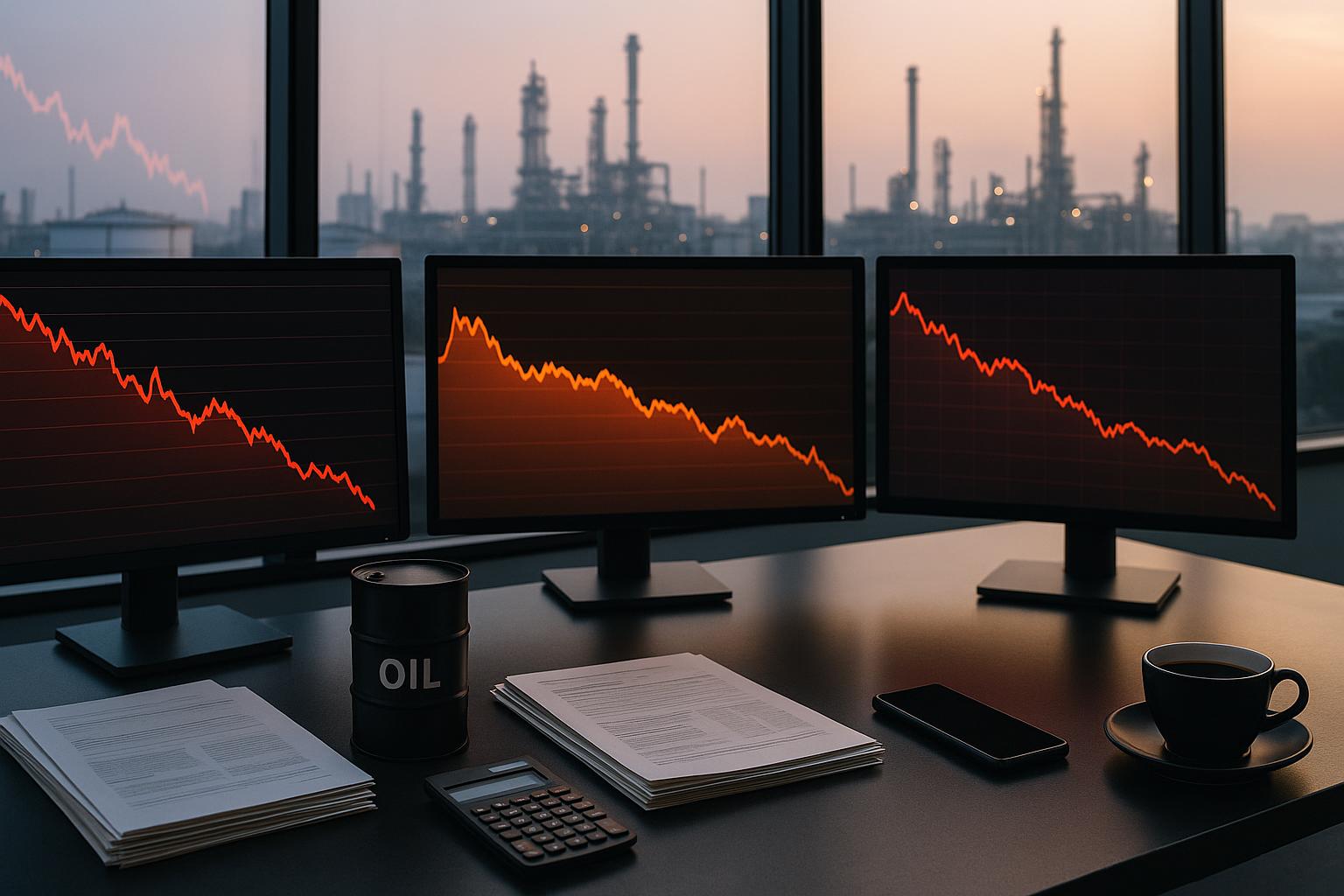
Oil prices plunged more than 10% in a single session.
The S&P 500 hit a record high.
The Nasdaq posted its longest winning streak since 1992.
The Dow jumped more than 800 points.
What happened?
Iran’s Foreign Minister declared the Strait of Hormuz “completely open” for commercial vessels — triggering one of the largest single-day market moves of the year.
U.S. crude fell 11.4% to $83.85 per barrel. Brent crude slid 9% to $90.38. Heating oil futures dropped 10%.
For investors, this is not just a geopolitical news story.
It is a window into how modern markets work — and where AI fits into the picture.
What Just Happened: Seven Weeks of Market Tension Released
The Strait of Hormuz crisis began on February 28, 2026.
Before the conflict, approximately 25% of the world’s seaborne oil trade and 20% of global LNG exports passed through the region daily.
Over the following seven weeks, oil prices climbed more than 40%. Brent crude peaked near $120 per barrel. Jet fuel margins surged dramatically. Airlines rerouted flights. Costs exploded.
Then, in one session, much of that pressure disappeared.
The S&P 500 has now rallied more than 12% since late March. Markets erased war-related losses.
The lesson is simple.
Geopolitical shocks create noise.
Structural trends create direction.
The Immediate Winners: Airlines, Energy, Travel
When energy prices fall, the hardest-hit sectors recover first.
Airlines saw immediate benefit. Fuel is their largest cost. A 10% drop in jet fuel translates into massive savings.
Cruise operators also rebounded as costs dropped and demand expectations improved.
Energy companies pulled back, but the broader market viewed the move as positive.
Lower oil means lower inflation.
Lower inflation means higher probability of rate cuts.
Lower rates support higher valuations.
The VIX dropped sharply as risk appetite returned.
Why This Matters for AI Investors
This is where most investors miss the real signal.
Companies with AI-driven systems handled the crisis differently.
Fuel optimization improved route efficiency.
Dynamic pricing captured demand shifts faster.
Predictive maintenance reduced operational risk under stress.
AI did not just improve performance.
It amplified advantage during volatility.
That is the key.
AI infrastructure matters most when conditions are unstable.
The Anthropic–White House Signal
On the same day, Anthropic CEO Dario Amodei was scheduled to meet with the White House.
This highlights a second layer of AI investing.
Government involvement.
AI is no longer just a technology sector.
It is becoming a strategic national asset.
This creates both opportunity and risk.
Government contracts can drive massive growth.
But regulatory constraints can limit deployment.
Investors must understand both sides.
What the Market Reaction Reveals
Markets did not rally just because oil fell.
They rallied because the decline removed inflation pressure.
That changes interest rate expectations.
And interest rates drive valuations.
This entire chain now moves faster than ever.
AI-driven analytics allow institutions to process these relationships in real time.
That is why oil, equities, and crypto all moved simultaneously.
Bitcoin rose above $78,000.
Crypto stocks surged.
Equities hit highs.
This is not coincidence.
This is a system operating at AI speed.
The Remaining Risk
This is not a full resolution.
It is a temporary easing.
The Strait is open — but under conditions.
Tensions remain unresolved.
If the situation reverses, volatility returns immediately.
Investors must treat this as a scenario — not a certainty.
Conclusion
April 17, 2026 delivered two clear lessons.
First:
Geopolitical events create volatility, not direction.
AI and infrastructure trends remain unchanged.
Second:
Markets now move at a speed driven by AI-powered analysis.
The question is not whether to chase the move.
The question is whether you understand what is actually driving it.
Because the underlying forces — infrastructure, capital flow, and AI adoption — are still strengthening.
And that matters far more than a single day’s headline.
This article is for informational purposes only and does not constitute financial advice.