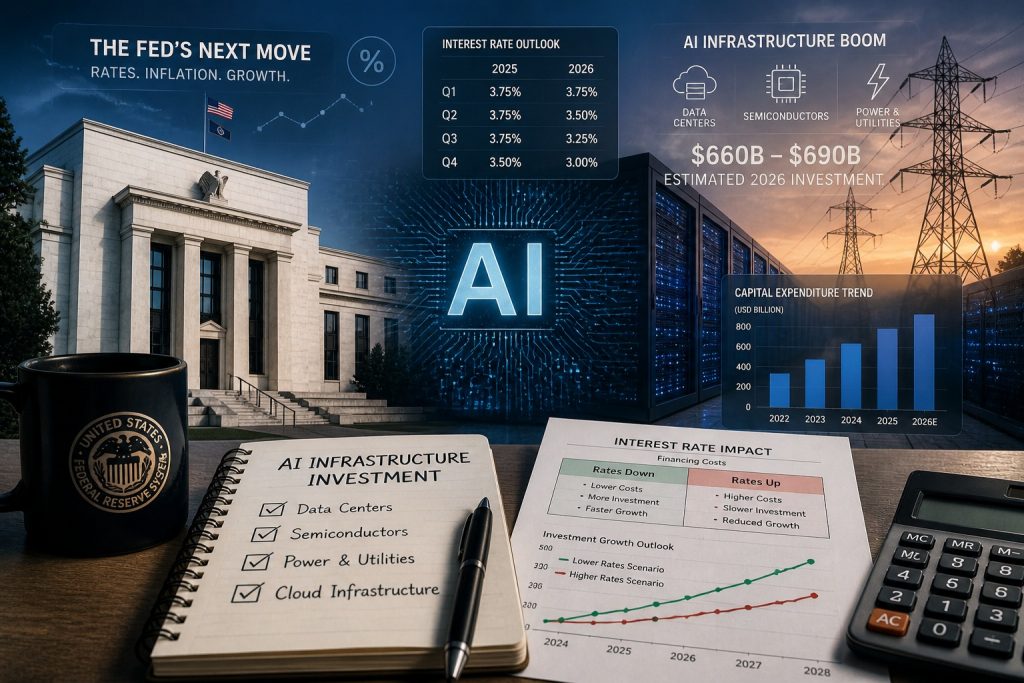
Why the Fed’s Next Move Could Determine the Fate of AI Infrastructure Investment
Introduction Most investors watch the Federal Reserve for one reason. Stock valuations. When rates fall, future earnings are worth more […]

Introduction Most investors watch the Federal Reserve for one reason. Stock valuations. When rates fall, future earnings are worth more […]

Artificial intelligence is not just a technological evolution; it’s fundamentally reshaping investment landscapes and corporate tactics. From workforce restructurings in crypto to surging data center demands, AI’s influence is rewiring global economics and asset management. This article delves into how investors and companies must adapt strategically to exploit AI’s transformative power, analyzing practical implications, risks, and opportunities that define the future of automation-driven finance.

The dynamic integration of artificial intelligence into finance is not just enhancing internal workflows but fundamentally reshaping the role of the Chief Financial Officer (CFO). As enterprises seek to harness AI-driven insights for forecasting, control, and operational efficiency, investors and financial leaders must understand how these technological advancements open new avenues for strategic growth and risk management.
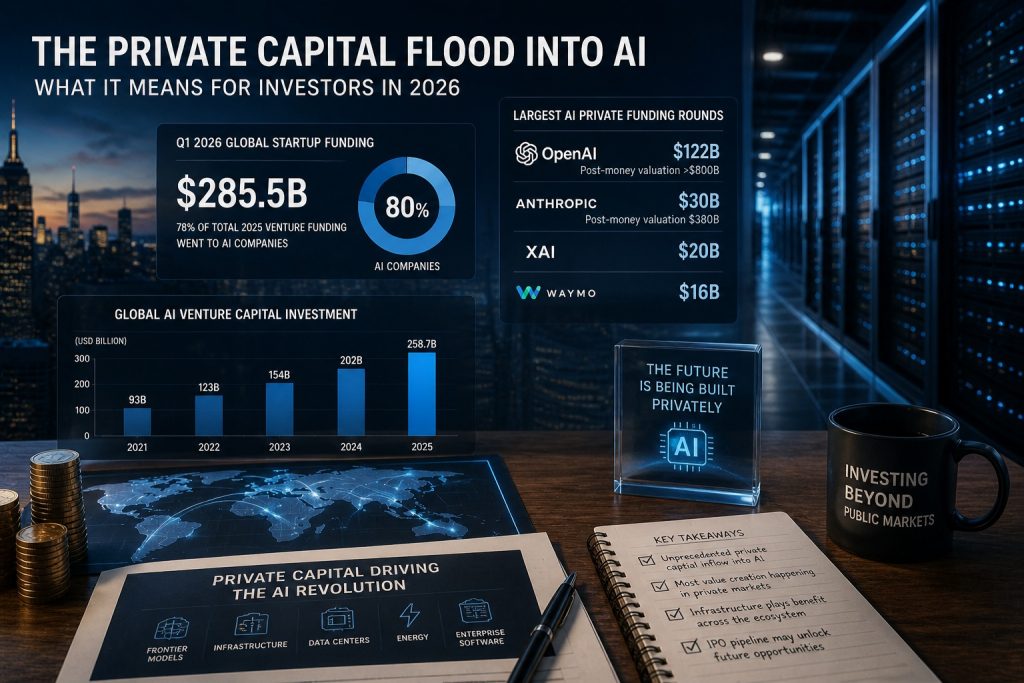
Introduction The biggest AI companies in the world are not publicly traded. OpenAI, Anthropic, and xAI are building the foundational

In an era marked by rapid technological advancements and geopolitical uncertainties, AI and automation have emerged as pivotal forces reshaping markets and investment strategies. Understanding these dynamics is vital for investors aiming to capitalize on innovation-driven growth while mitigating associated risks.

As artificial intelligence reshapes the global finance landscape, investors must adapt to new dynamics driven by automation and AI-powered tools. This article explores how advanced AI technologies are influencing investment decisions, operational efficiencies, and risk management, providing actionable insights for forward-thinking investors seeking to leverage these innovations for sustainable growth.

Introduction Markets in 2026 are dominated by short-term thinking. Prices move rapidly. News cycles refresh constantly. AI systems process data

In an era marked by rapid technological evolution, AI and automation are not simply innovations but transformative forces reshaping investment landscapes. Understanding their implications extends beyond surface-level analysis, revealing profound shifts in business models, market valuations, and sectoral leadership. This article explores the nuanced intersection of AI, automation, and investing, offering strategic insights for investors aiming to capitalize on these trends while managing associated risks.

As artificial intelligence continues to transition from purely digital domains into physical and autonomous systems, the complexities of AI governance are rapidly expanding. For investors and enterprises alike, understanding these evolving governance frameworks—especially around physical AI and the emergence of agentic AI governance products—is critical for navigating risk and capitalizing on automation-driven growth. This article unpacks the nuanced challenges and real-world implications of managing AI systems that act in the physical world, offering investors actionable insights to align their strategies with the future of AI-driven industries.
Introduction Most investors focus on returns. They track performance, compare results against benchmarks, and evaluate strategies by how much they